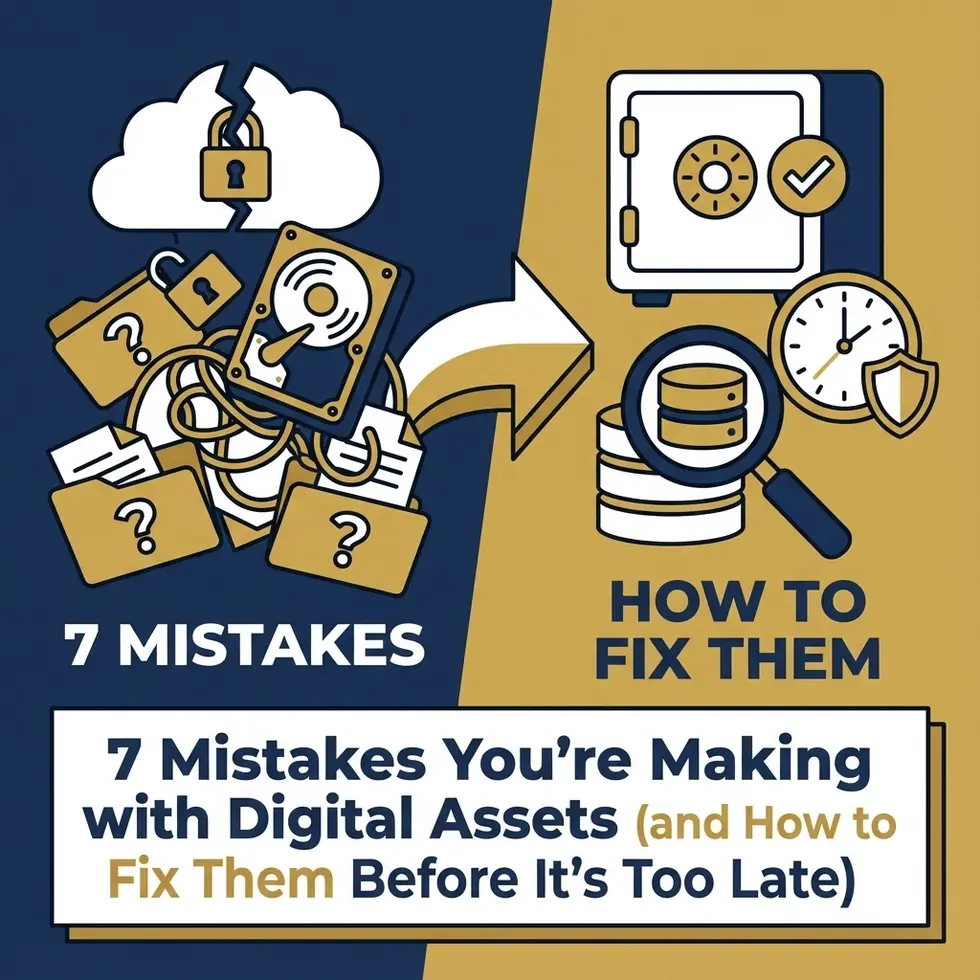
Your grandmother probably left behind a shoebox full of photos, some jewelry, and maybe a savings account passbook. Today, the average person has dozens of online accounts, thousands of digital photos, cryptocurrency wallets, and social media profiles that could outlive them by decades. Yet most people's estate plans haven't caught up with their digital lives.
If you think your family will just "figure it out" when you're gone, you're setting them up for a digital nightmare that could cost thousands of dollars and months of frustration. Here are the seven biggest mistakes people make with digital assets: and how to fix them before it's too late.
Mistake 1: Assuming Your Family Can Access Everything "Somehow"
This is the big one. Most people assume their spouse or kids can just call Apple, Google, or Facebook and explain the situation to gain access to their accounts. Reality check: tech companies have strict policies that often prevent family members from accessing deceased users' accounts, even with a death certificate.
The Fix:
- Create a comprehensive digital asset inventory listing all your online accounts, apps, and digital properties
- Include account usernames (not just email addresses)
- Store this list securely with your other estate planning documents
- Review and update it at least annually: you probably created three new accounts just this month
Mistake 2: Storing Passwords in Your Browser and Nowhere Else
Your Chrome browser might remember all your passwords perfectly, but what happens when your laptop crashes or gets stolen? Worse yet, what happens when you die and your family needs to access accounts but can't get past your computer's login screen?
Browser-saved passwords are convenient for you but useless for your loved ones in an emergency.
The Fix:
- Use a reputable password manager like 1Password, Bitwarden, or LastPass
- Share your master password and recovery information with your attorney or trusted family member
- Include instructions on how to access your password manager in your estate plan
- Consider using a service that allows emergency access for designated contacts
Mistake 3: Forgetting About Two-Factor Authentication
You did the right thing by enabling two-factor authentication on important accounts. But now your Twitter, banking, and email accounts are locked behind a phone number or authenticator app that dies with you. Your family might have your password but still can't get in.
The Fix:
- Generate and securely store backup codes for all accounts with two-factor authentication
- Document which phone number or authenticator app is linked to each account
- Consider setting up trusted devices that can bypass two-factor authentication
- Include instructions for family members on how to handle two-factor authentication
Mistake 4: Not Planning for Business and Professional Digital Assets
If you run a business or work as a freelancer, your digital assets likely include client files, business social media accounts, domain names, and maybe even a WordPress site generating income. These aren't just personal accounts: they're potentially valuable business assets that need specific succession planning.
The Fix:
- List all business-related digital assets separately from personal ones
- Include information about recurring payments and subscriptions
- Plan for business continuity or asset transfer in your business succession documents
- Consider the tax implications of transferring valuable digital assets
- Document any business partnerships or agreements affecting digital asset ownership
Mistake 5: Ignoring Cryptocurrency and Digital Investments
Cryptocurrency presents unique challenges because it's designed to be decentralized and private. If you die without sharing your private keys or seed phrases, your crypto holdings become permanently inaccessible. There's no customer service number to call, and the blockchain doesn't care about death certificates.
Even digital investment accounts through platforms like Robinhood, Acorns, or robo-advisors can be tricky for family members to locate and access without proper planning.
The Fix:
- Safely document all cryptocurrency private keys, seed phrases, and wallet information
- List all digital investment accounts, including smaller apps you might forget about
- Consider using a cryptocurrency estate planning service or attorney familiar with digital assets
- Never store crypto information in easily hackable locations like email or cloud storage
- Include specific instructions about timing: crypto markets are volatile, and hasty decisions could cost your heirs significant money
Mistake 6: Treating Social Media Like It's "Just Social Media"
Your Instagram account might feel trivial, but it could contain years of family memories, business relationships, or even income streams if you're an influencer. Some social media accounts can be monetized or transferred, while others are strictly personal and non-transferable.
More importantly, active social media accounts can become targets for identity theft or cause emotional distress for family members who see friend requests or posts appearing after you've died.
The Fix:
- Decide what you want to happen to each social media account (delete, memorialize, or transfer)
- Document your preferences in your estate planning documents
- Set up legacy contacts on platforms that offer them (Facebook, Instagram, Google)
- Consider the sentimental value: those photos and messages might be irreplaceable family memories
Mistake 7: Doing Digital Estate Planning Once and Never Updating It
Digital assets change constantly. You close old accounts, open new ones, and forget about subscriptions you signed up for during a free trial. That comprehensive digital asset list you created two years ago is probably missing a dozen accounts and includes several that no longer exist.
Unlike physical assets, digital assets evolve rapidly, and your estate plan needs to keep pace.
The Fix:
- Set a calendar reminder to review your digital asset inventory every six months
- Update your list whenever you open or close significant accounts
- Review subscription services annually: your family shouldn't discover you were paying for seventeen streaming services
- Keep your attorney informed about major changes to valuable digital assets
- Consider whether new accounts need specific estate planning attention (like business accounts or investment platforms)
The Digital Legacy You Didn't Know You Were Creating
Here's something most people don't consider: your digital footprint will outlive you whether you plan for it or not. Email accounts stay active, social media profiles become memorials, and subscription services keep charging your credit card until someone notices.
Without proper planning, you're leaving your family to play digital detective, trying to piece together your online life while grieving your loss. They might spend months tracking down accounts, struggling with customer service, and making decisions about digital assets without knowing what you would have wanted.
Taking Action Before It's Too Late
Digital estate planning isn't just about passwords and accounts: it's about ensuring your complete legacy is preserved and transferred according to your wishes. Your digital assets might be more valuable and meaningful than you realize, and they certainly require more planning than traditional physical assets.
The good news? Unlike many estate planning tasks, you can tackle digital asset planning in stages. Start with your most important accounts this weekend, then build your inventory over time.
Ready to Protect Your Digital Legacy?
Don't let your family struggle with your digital assets while they're grieving. At Driven By Design Estate Planning, P.C., we help clients create comprehensive estate plans that address both traditional and digital assets. We understand the unique challenges of digital estate planning and can help ensure your online legacy is handled according to your wishes.
Call us at (your phone number) or email us to schedule a consultation. Let's make sure your digital assets are properly planned for: because your family has enough to worry about without trying to crack your digital life like a detective story.
Your future self (and your family) will thank you for taking action today.

Comments
There are no comments for this post. Be the first and Add your Comment below.
Leave a Comment